
Designing Across Borders
— 24 April 2026 by Magnus Strom
— 24 April 2026 by Magnus Strom

Most architects work where they are registered. The logic is straightforward: local knowledge, established relationships, familiarity with the system. It is a reasonable way to operate, and for many practices it is the only way.
Over the past decade we have designed and secured approvals for projects across ten countries, including the UK, Sweden, Finland, Spain, the UAE, the United States, and Romania. In Rhode Island we navigated complex Coastal Resources Management considerations on a waterfront project. The regulatory environments differ considerably, and every approval has been granted.
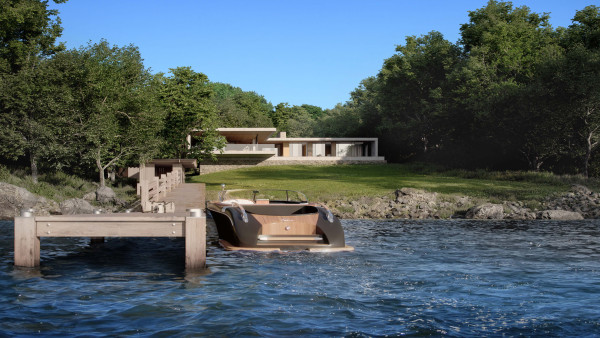
Built project - Cedar Cove - Rhode Island, USA
Something our clients occasionally find surprising: overseas planning is often more straightforward, not less. Systems with clear, objective rules are simply more development-friendly. You know what is permitted, you design to it, and the process moves accordingly. The UK sits at the opposite end of that spectrum. A fully compliant scheme can still be refused on subjective grounds, and the accumulation of material considerations and supporting documents creates a process that serves caution more than it serves good development. We work within it, but we do not hold it up as a model. Sweden operates almost entirely differently. The Detaljplan (Detailed Zoning Plan) defines permitted use, height, footprint and setback with numerical precision, and while nobody would suggest that Sweden takes environmental concerns lightly, those concerns are dealt with through clear, upfront policy rather than case-by-case deliberation. The same principle applies across most of the countries we work in: clear rules, properly understood, are something to work with rather than around.
Understanding those rules means more than reading the legislation. Early in any overseas project we spend time with the relevant authorities directly, and that is one of the genuinely rewarding aspects of working internationally. In Romania, where our scheme was pushing the boundaries of what the local framework would typically support, we met with the city architect before formal submission to explain our approach and make the case for it in person. In Sweden and on the Malibu Ridge project in California we held pre-application meetings with planning representatives. These conversations are consistently productive, and they tend to go in both directions: the authorities are often as curious about why we are working so far from home, and what we are bringing to the project, as we are about how their system works. That kind of exchange is something we actively look forward to.
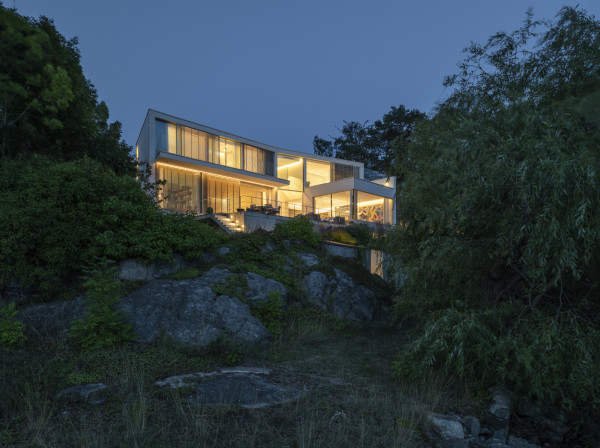
Private House - Sweden
In many of the countries we work in we collaborate with a locally registered architect of record who submits on our behalf and handles the formal relationship with the authorities. Their local knowledge and professional standing are necessary, and the arrangement works well. We lead the project, the design intent, the technical decisions, the client relationship, and the architect of record fulfils a specific and important function that we could not perform from outside the country. In Sweden, where the process is clear and the submission requirements well-defined, we have worked without that arrangement entirely. The right approach depends on the location and the project.
What does not change is the method. When we take on a project overseas, the first step is to understand the regulatory landscape: what kind of approval is required, what the policy framework says, what supporting documents are needed, and where the genuine risks in the process lie. Every country has its own logic, and finding it early determines how well the rest of the project runs.
Clients appoint us because they love our work. The ability to deliver it anywhere, through whatever approval process the location demands, is simply part of what that means.
Visuals by Strive CGI
Instagram: stromarchitects
YouTube: strom-architects