Malibu Ridge
Malibu Ridge is a private house on a gently sloping site overlooking the Pacific coastline. It replaces a home lost in the 2018 Woolsey Fire and responds to a tightly constrained planning context shaped by topography, climate and fire risk.
The clients are a couple with three children, based in the Malibu area. Their combined backgrounds in property development and interior architecture gave them a clear sense of what they were looking for, and they looked beyond their immediate context to find a practice whose approach they felt a genuine connection with. That deliberate choice shaped the collaboration from the outset. The house they wanted was one built around how a family actually lives, organised around daily routines, outdoor living and the ability to adapt over time.
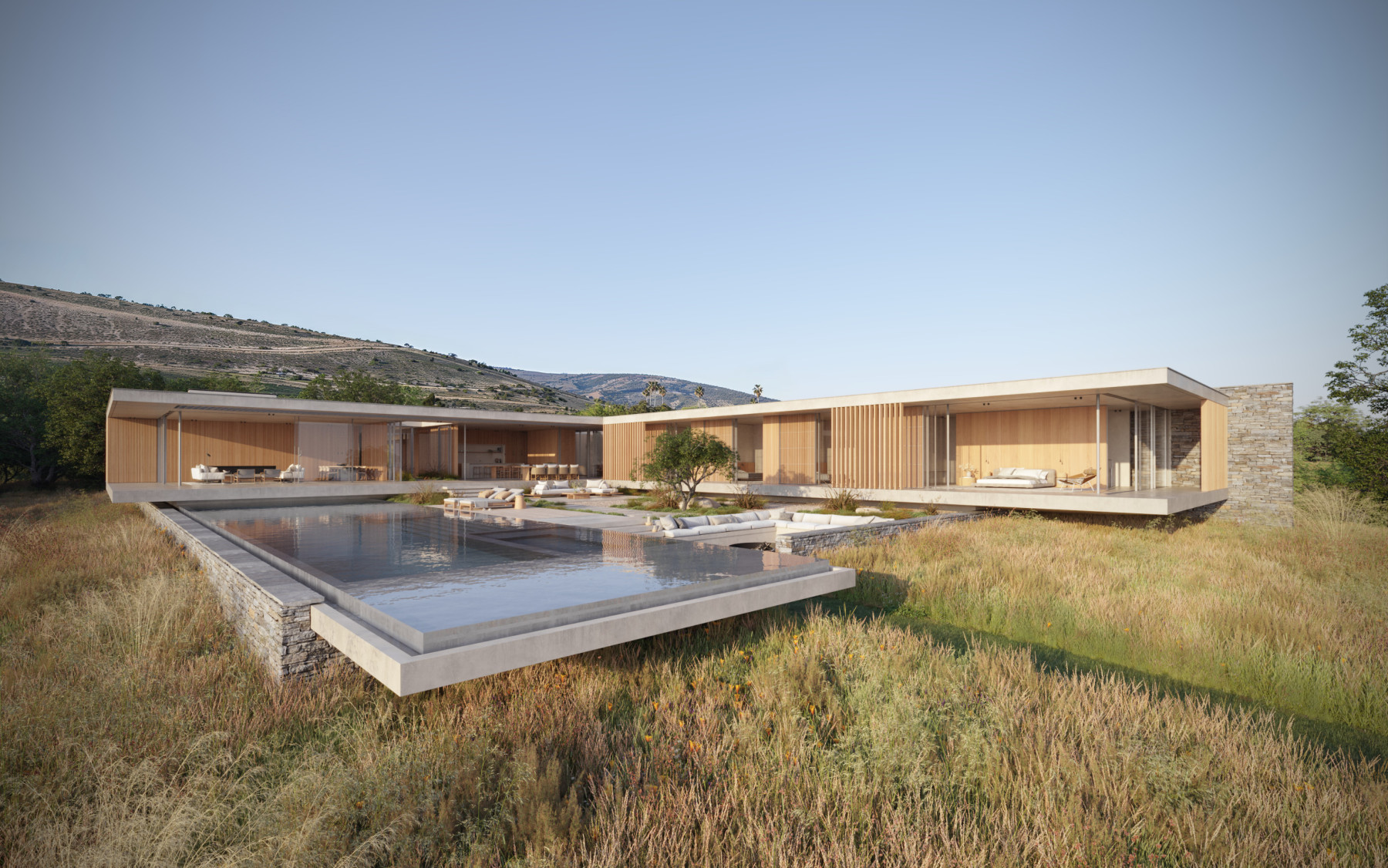
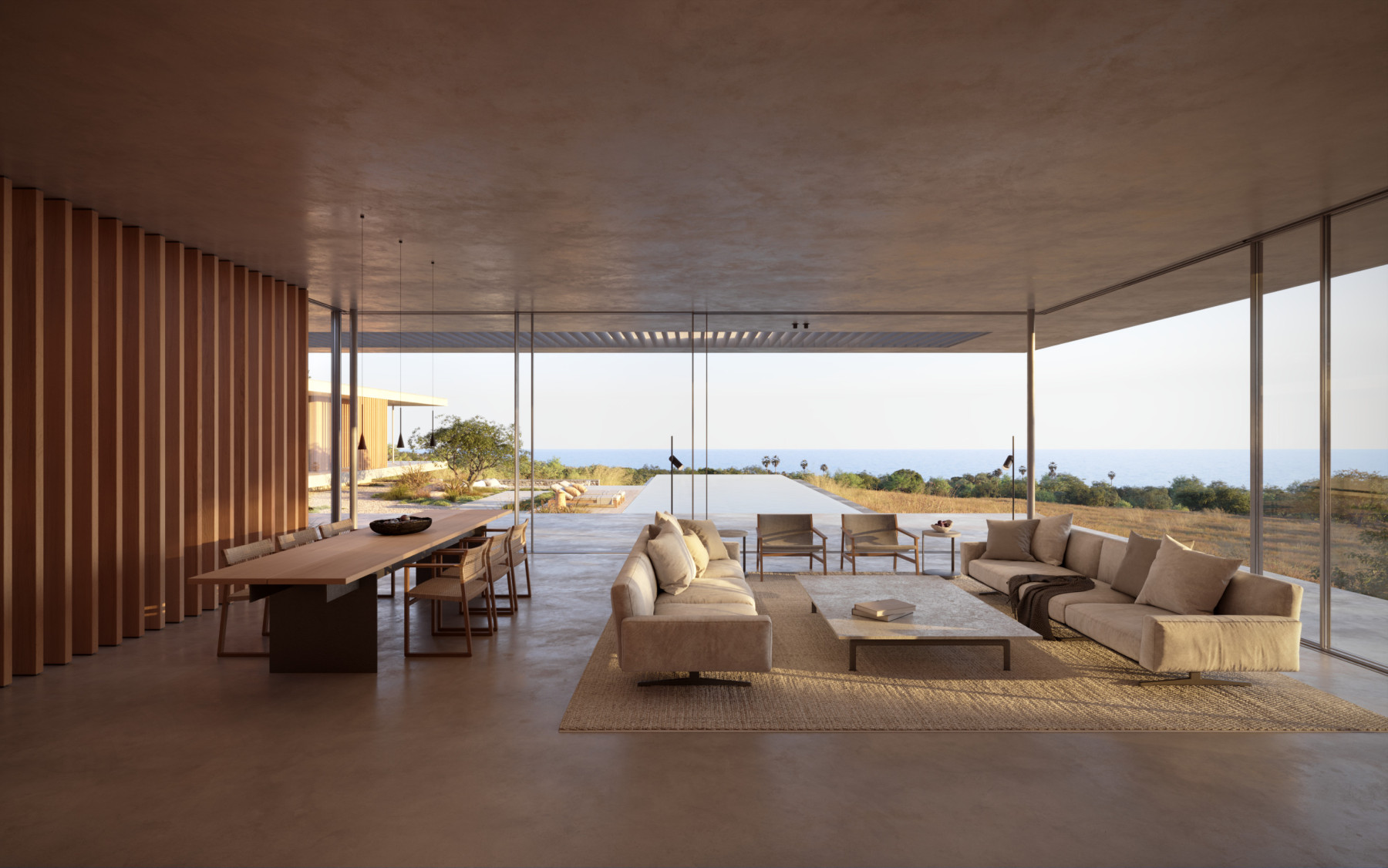
The plan takes the form of an L, with one wing containing the living and dining spaces and the other accommodating the bedrooms. This arrangement creates a clear separation between shared and private areas while keeping the two connected.
The L sits on a level podium, and the space contained within it forms a two-sided courtyard, a landscape garden defined by a low retaining wall on one side and the pool edge on the other. The ground falls away beyond this edge, and both the cantilevered infinity pool and the principal bedroom at the far end of the bedroom wing extend out over it, maintaining a strong visual connection to the coastline below.
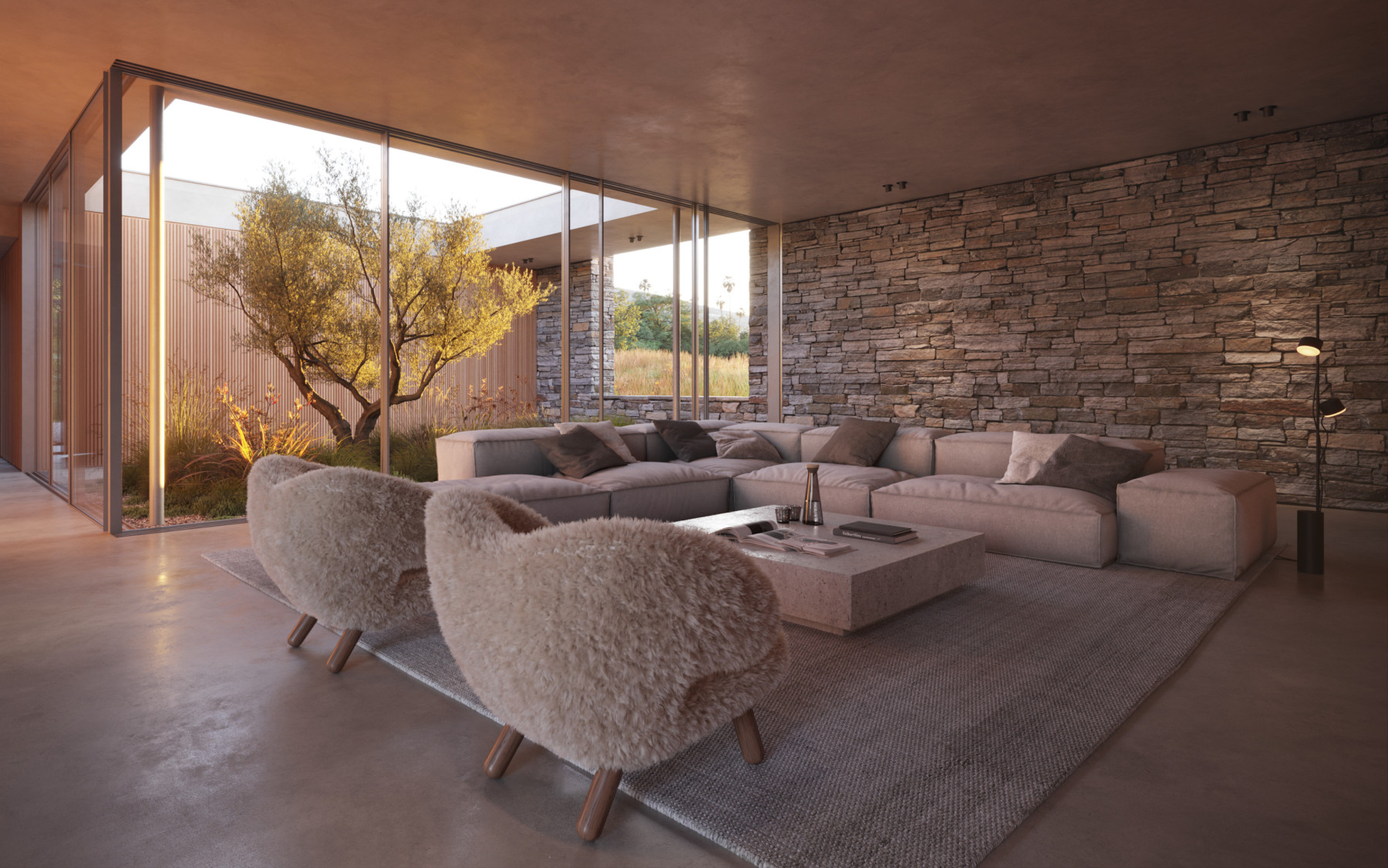
Within the architecture itself, two smaller courtyards organise the plan. The first sits at the entrance and draws the landscape into the heart of the house, separating the living and dining areas from the family kitchen while preserving a visual connection between them. The second is tucked into the deep corner of the L, providing light and a sense of calm to the family room adjoining the kitchen.
Service spaces are positioned along the outer edge of the plan, allowing the inner elevations to remain open and largely glazed. The building is anchored into the hillside at its base, with the main floor extending outward toward the ocean.
The architecture carries a nod to mid-century Los Angeles houses, in its strong horizontality, its slim window detailing and its generous areas of glazing. The result is a building that is restrained without being austere, and precise without sacrificing warmth. Deep overhangs provide shade, while terraces and a tennis court step with the natural contours of the site.
- Ström Architects team − Magnus Ström, Daniel Cutter
- Location − Los Angeles, USA
- Visualisation − Strive CGI
- Contractor − Aksel Development